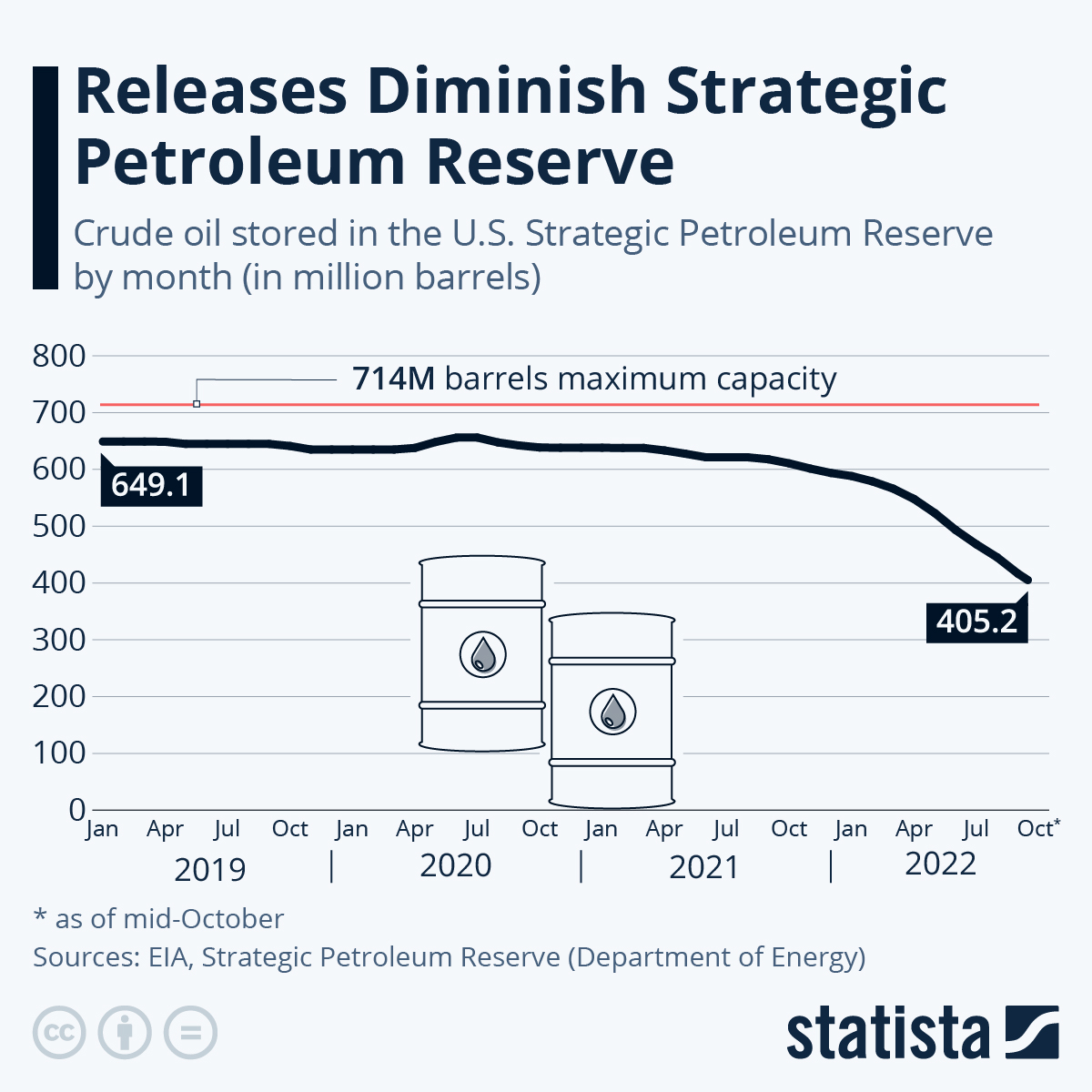
Oil reserves in the U.S. have fallen to historic lows as the Trump administration has been releasing stocks to counteract rising oil and gas prices amid the war in Iran. According to federal data, the speed of the release has broken the previous record set during the Biden presidency when reserves were tapped because of the Russian invasion of Ukraine and the ensuing energy crisis.
A possible opening of the Strait of Hormuz, an important global oil chokepoint, could alleviate the situation. U.S. President Donald Trump has said he expects the channel to be open once again as of Friday due to an interim peace deal coming into effect. This expectation has kept the price of oil futures below $80 a barrel despite the current supply crunch.
As of June 12, numbers from the Energy Information Administration and the Strategic Petroleum Reserve website show U.S. oil reserve levels of just around 340 million barrels or 48 percent of storage capacity, down from 415 million barrels as recently as March. While both Biden's and Trump's releases were swift, the more concerning conclusion from the data is that reserves were only slowly replenished between 2023 and 2025, meaning that Trump's current releases hit the stock even harder. Biden in 2024 cancelled a major stock-up as prices were deemed too high to take oil out of the market (which would affect prices negatively), while Trump also failed to replenish significant amounts and refilled the reserve at an even slower rate than Biden had before.
The emergency powers of the Strategic Petroleum Reserve have been called upon rarely since its creation in the 1970s. The Energy Department had previous to 2022 only listed three instances where supply disruptions became so dire the President ordered a release: Hurricane Katrina in 2005, Operation Desert Storm in 1991 and during the Arab Spring in 2011, when oil stopped flowing from Libya and other countries. Biden had also ordered the release of 50 million barrels in late 2021, when fuel prices were already rising. All of these sales were significantly smaller, however, than the major 2022 releases. The reserve is also engaging in non-emergency releases, for example for budget or upkeep reasons. Common during natural or other disasters are loans from the reserve to battered companies that repay the barrels with interest.