While major economies take extensive measures to hedge against supply risks in times of geopolitical tension, some industrialized nations have surprisingly small strategic oil reserves. This uneven distribution could impact energy market stability and the ability of individual countries to respond to crisis like has been the case during the war in Iran and the closure of the Strait of Hormuz.
When looking at days of oil use different countries' oil reserves could replace, the playing field is more level, with Germany, France and Italy all covering 120-135 days of net imports, showing not only the different size of their populations and nature of their industries, but also different patterns of energy production. This includes, for example, more nuclear energy in France and more renewables in the United Kingdom, which with a reserve of just 8.8 million tons still covers 115 days of net oil imports.
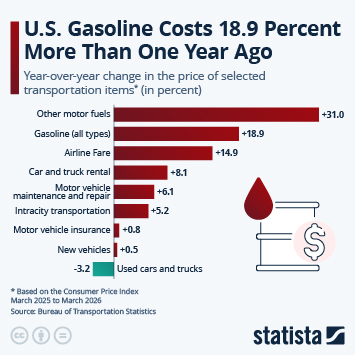
Japan as well as South Korea even cover approximately 200 days, while the U.S. and Canada are not listed in the statistic due to being net oil exporters. This means that in case of a dire emergency, these nations could just stop oil exports and be self-sufficient. However, as the last couple of years have shown, the strategic oil reserve has proven very useful even to a country like the United States, as it was used as a valuable tool for price mitigation rather than a measure of last resort.
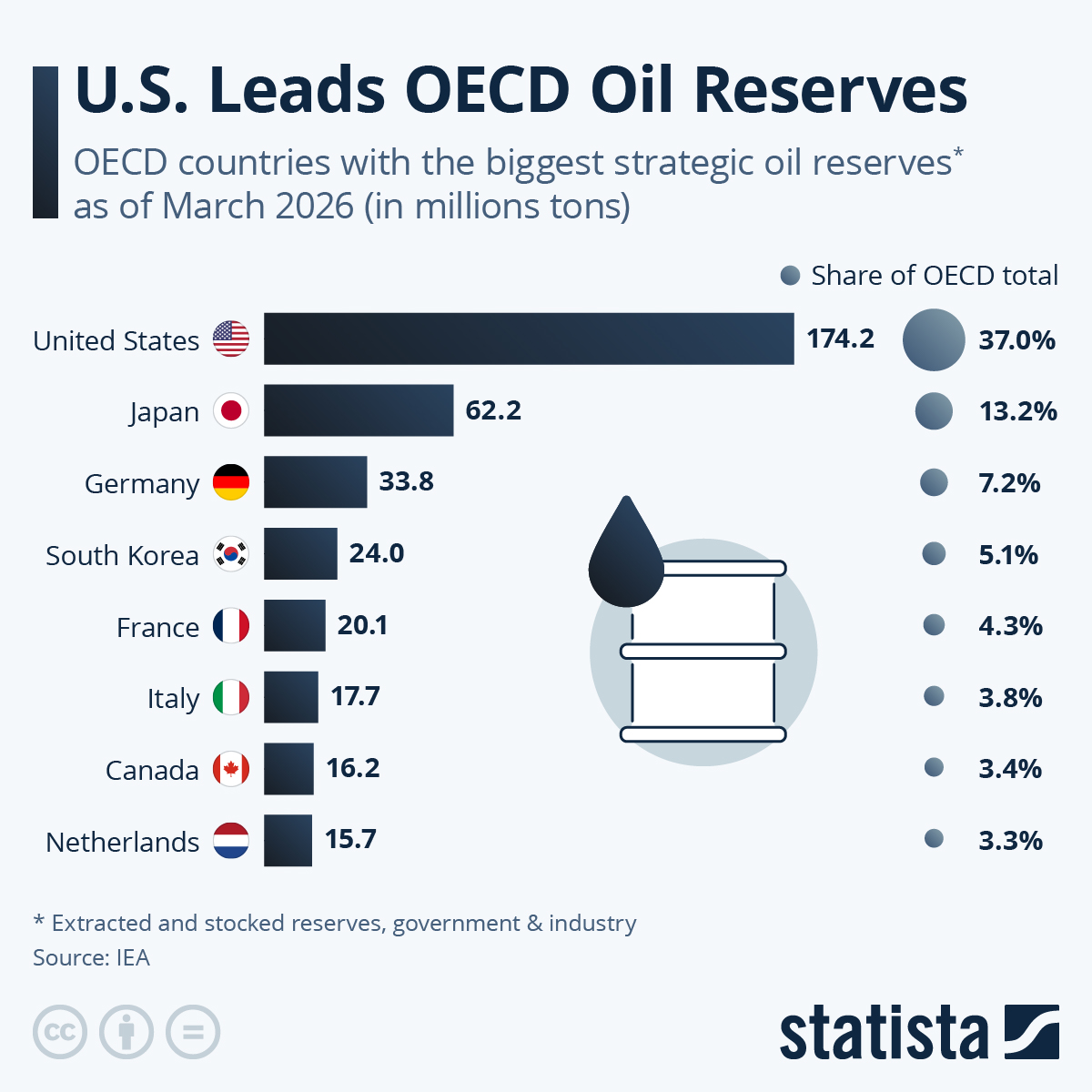
IEA data shows how strongly concentrated reserves are among a few OECD members. The United States dominates oil stocks among OECD nations, accounting for 37 percent of the total – or 174.2 million tonnes as of March 2026. This places the country well ahead of Japan, which held 62.2 million tonnes, or 13.2 percent, of OECD oil reserves this March as well as Germany at 33.8 million tons and 7.2 percent. However, stocks could already be lower as of mid-June because the governments of all three countries released large amounts of oil from their strategic reserves in an attempt to rein in rising gasoline prices. While U.S. reserves are larger on the industry side, both Japanese and German reserves are only 26 – 38 percent industry maintained, meaning that strategic government reserve are more central to the energy resilience of these countries.
The size of strategic oil reserves drops significantly after the three above-mentioned nations. Countries such as South Korea (24 million tonnes) and France (20.1 million tonnes) each only account for shares of 4-5 percent of OECD oil stocks. Other European nations contribute even smaller amounts to the total reserves.