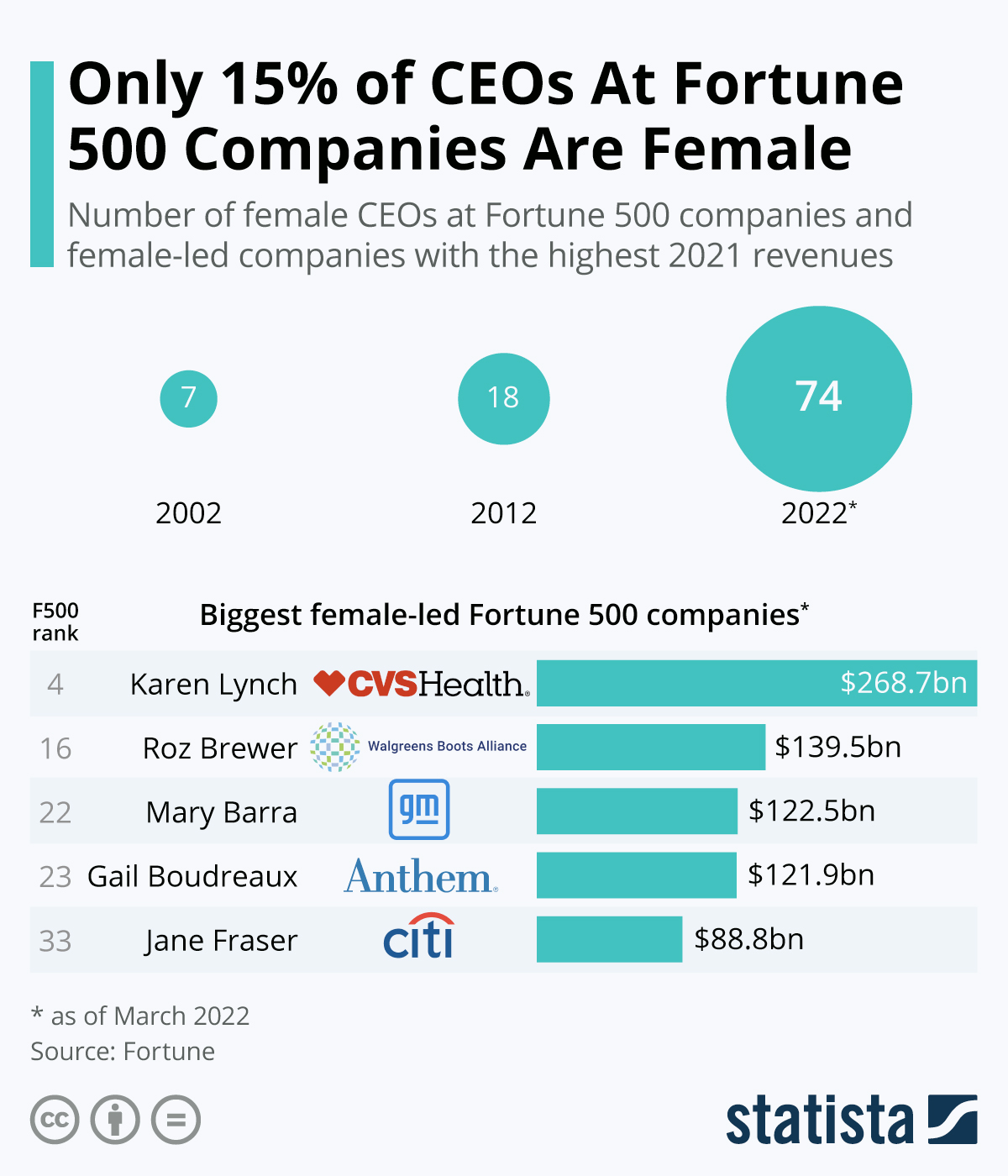
With the release of Fortune’s Most Powerful Women in Business 2026 list – based on company size, performance and leadership factors such as innovation, influence and societal impact – attention is once again turning to the role of women at the top of corporate America. While the ranking highlights influential female leaders across industries, women remain underrepresented in the very top jobs: 55 of the Fortune 500 companies were led by women in 2025, equivalent to 11 percent.
As our chart shows, that marks a significant increase from the early 2000s, when female CEOs were almost nonexistent among the largest U.S. firms (2 among the 500 with the highest turnover). Growth has accelerated particularly in recent years, with the number rising from 24 in 2015 to more than double that figure today. But despite this progress, female leadership at the highest corporate level remains the exception rather than the norm, at roughly one in ten.
Among the largest female-led companies in the Fortune 500 today are General Motors, led by Mary T. Barra since 2014, and Citigroup, headed by Jane Fraser since 2021. Reflecting their business influence, as well as the scale and performance of the companies they lead, Fraser ranks first and Barra second on Fortune’s 2026 list of the most powerful women in business.